We look for signs such as mud shelter tubes, damaged or hollow-sounding timber, and other visible indications of timber pest activity.
Pre-purchase building, timber pest & thermal inspection
Know what you're buying. Know what we check.
From the rooms you live in to accessible roof and subfloor spaces, we look for visible defects, moisture indicators and evidence of timber pests. The result is a practical picture of the property's condition before you commit.
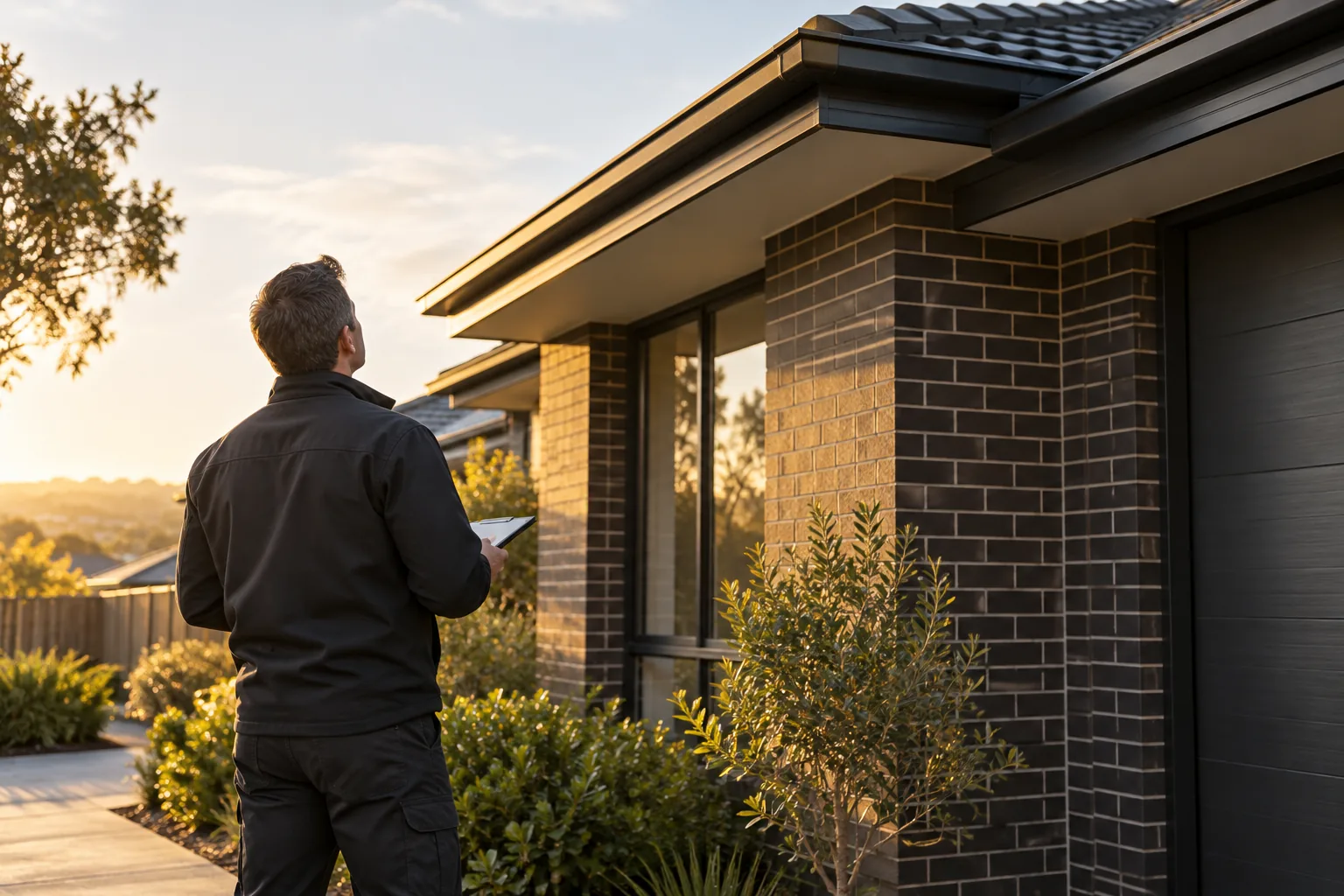
The inspection scope
One visit. A careful look at the whole property.
These are the core areas and tools in our combined pre-purchase inspection, where safe access and property conditions allow.
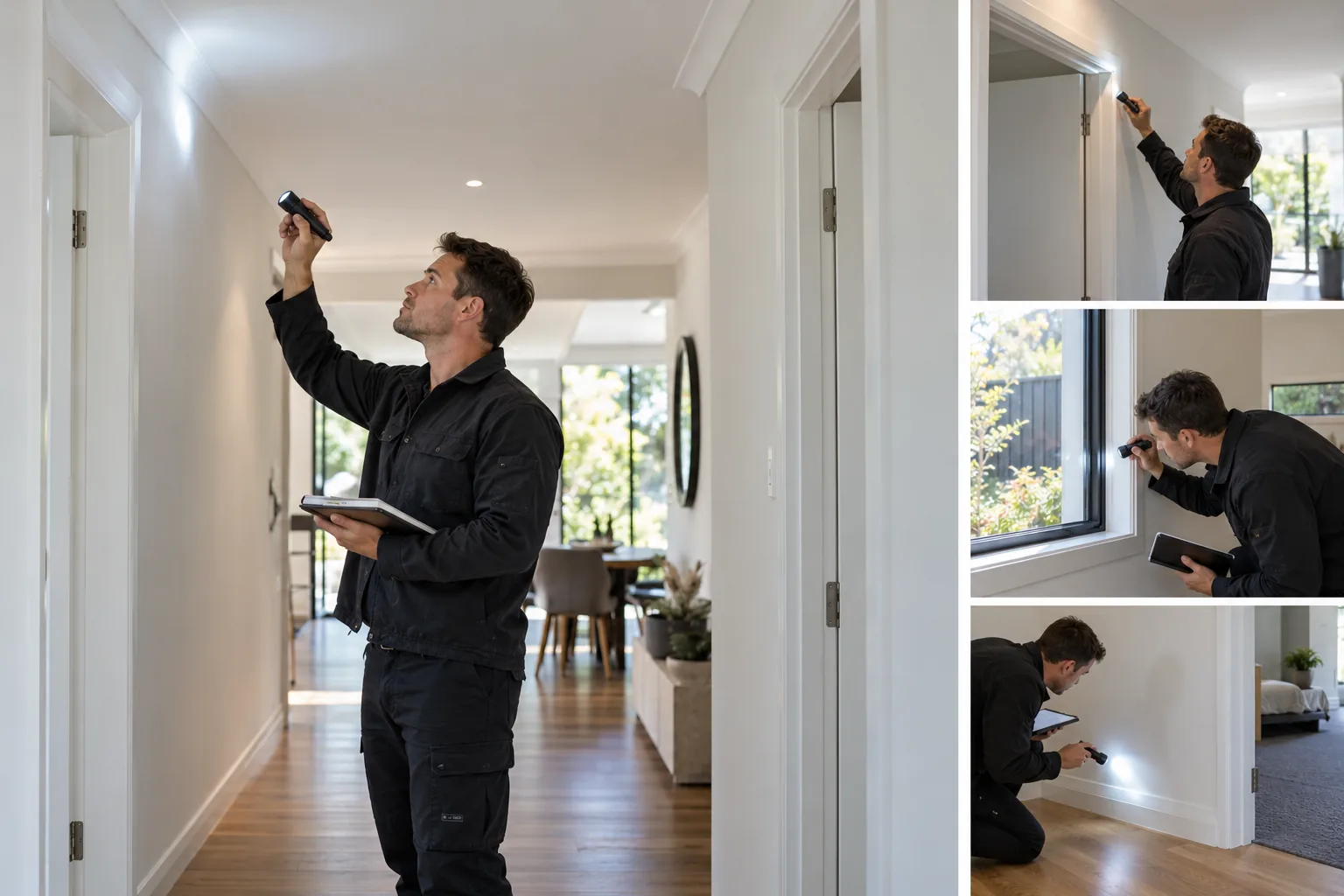 Full interior
- Full exterior
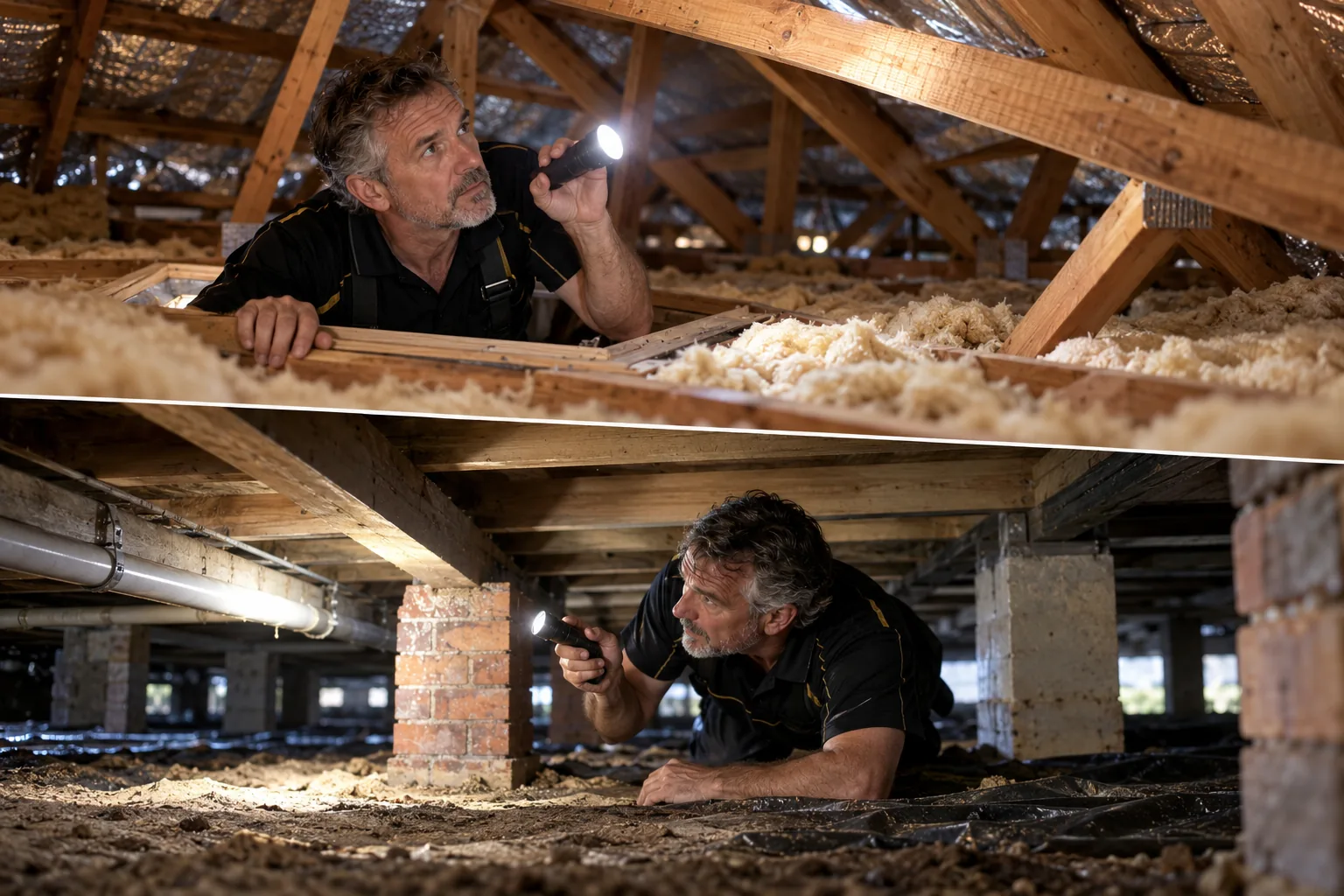 Roof spaces
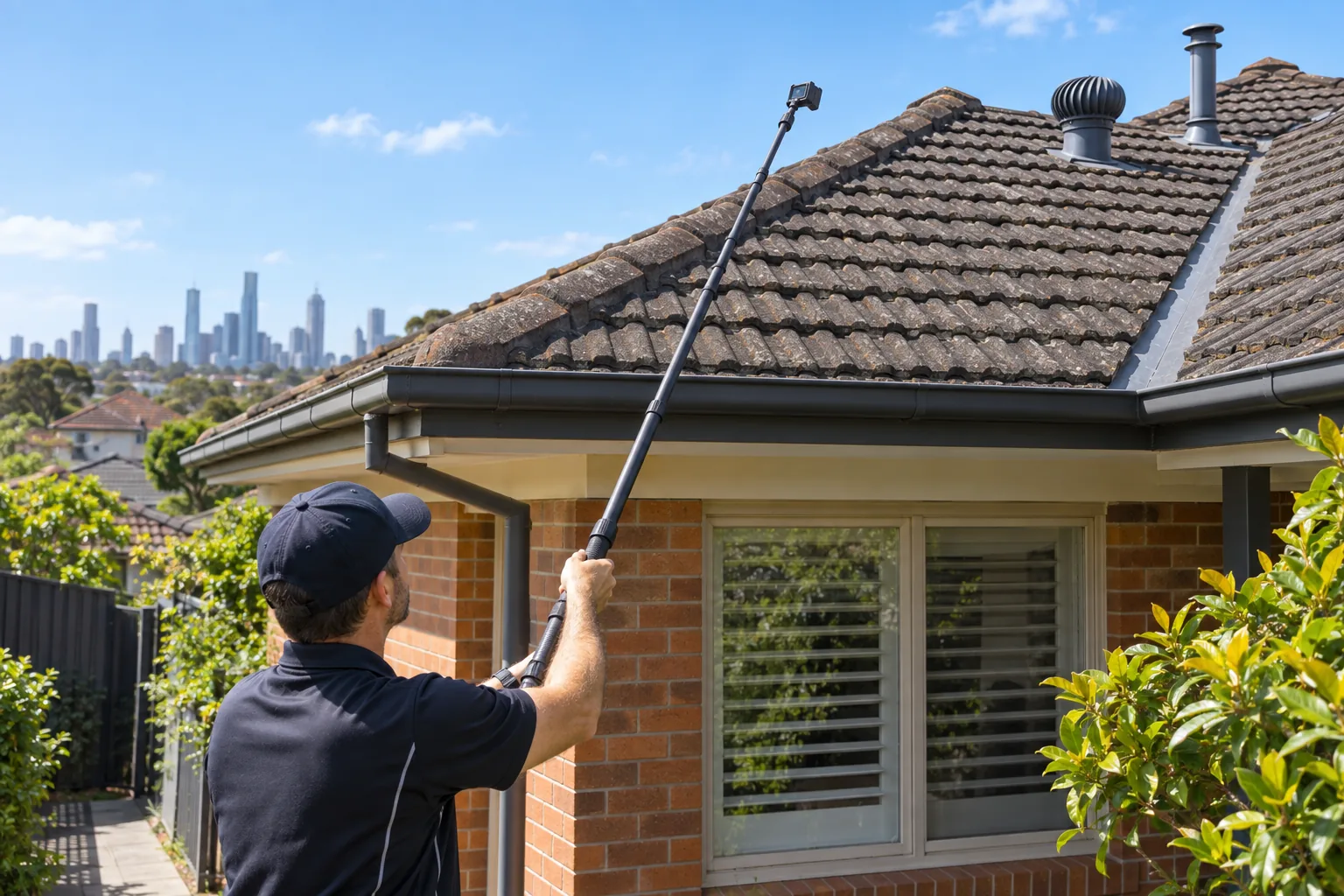 External roof
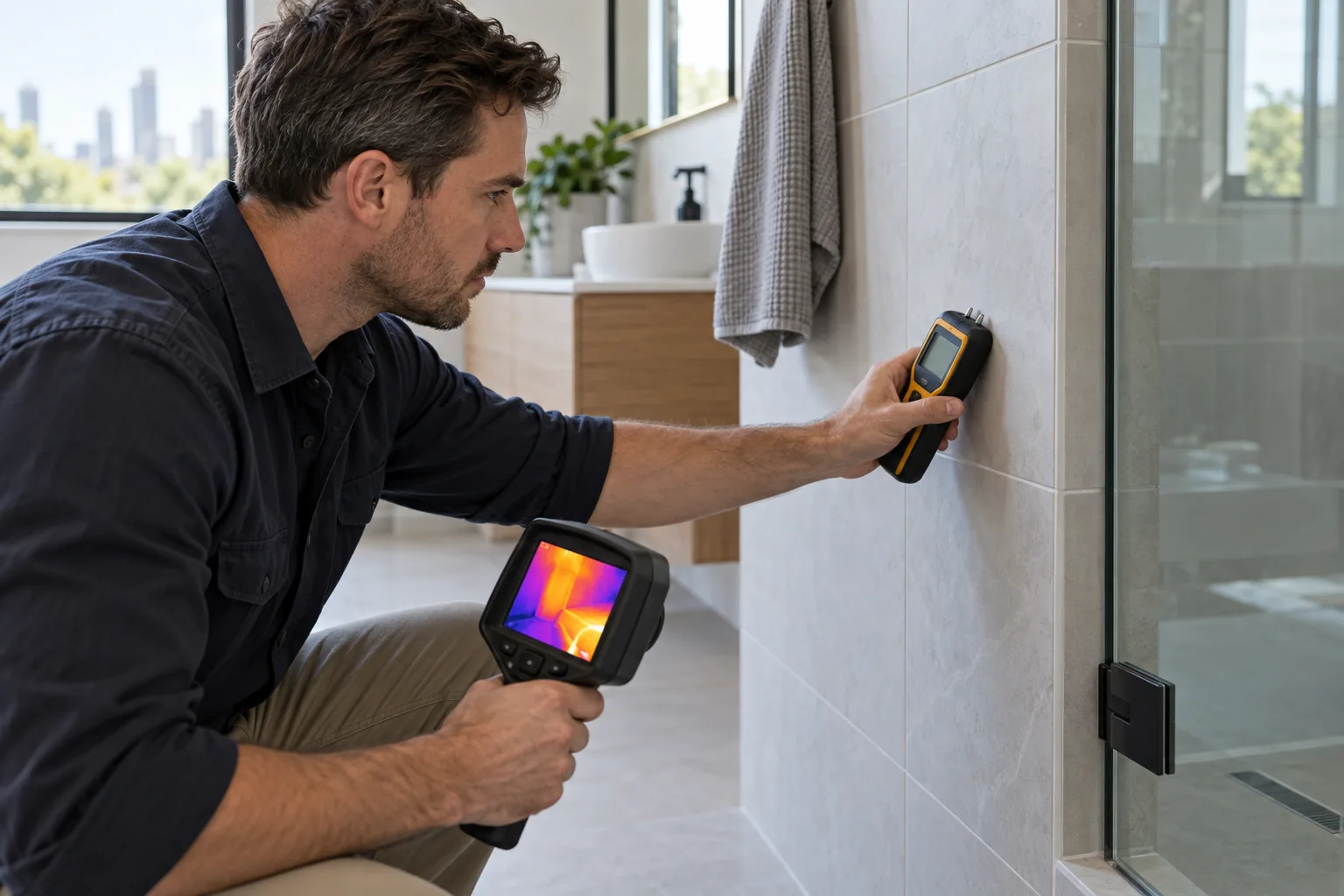 Moisture meter
- Thermal scanning
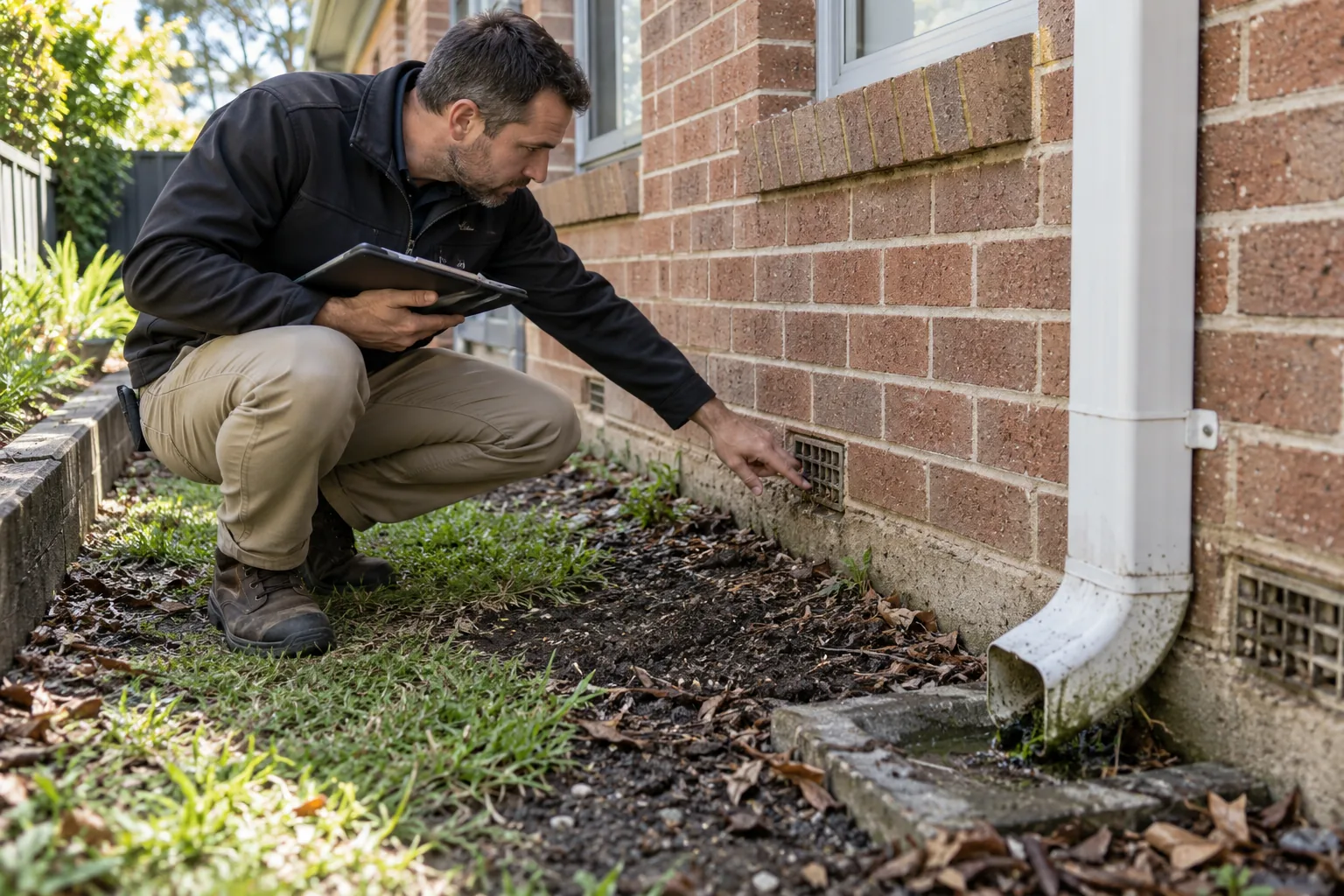 Building perimeter
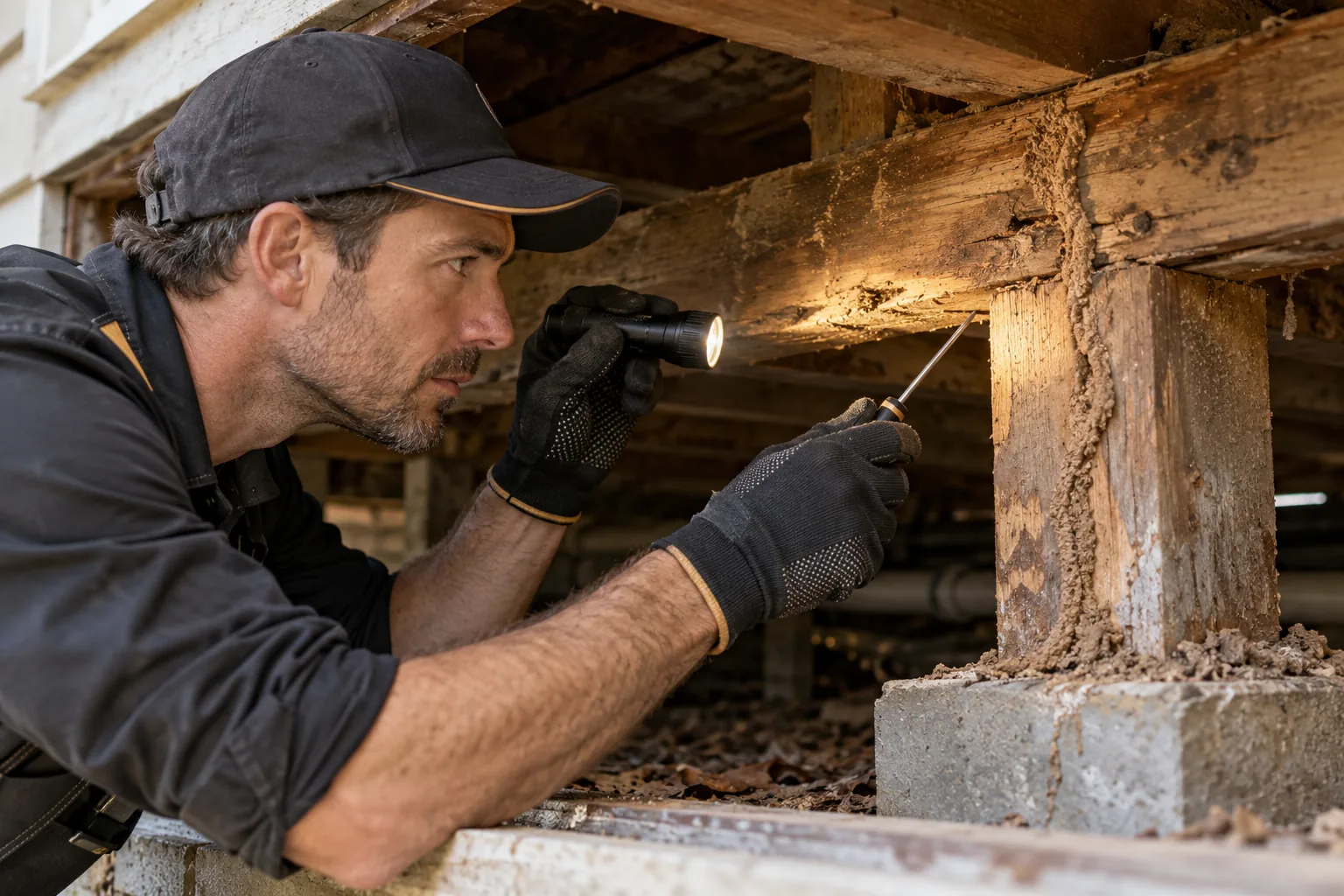 Timber pest inspection
- Subfloor, if accessible
 Same-day digital report*
- Phone call to discuss the report
01 / Building condition
Inside, outside, above and below.
We inspect visible and safely accessible building elements, looking for defects that may affect the property's condition and maintenance needs.
- Interior: walls, ceilings, floors, doors, windows, wet areas and visible signs of damage or movement.
- Exterior and perimeter: cladding, brickwork, drainage patterns, ground levels, retaining elements and conditions near the home.
- Roof exterior and roof space: visible roof coverings, flashings, gutters, framing and signs of moisture, from safe access points.
- Subfloor: visible framing, stumps or supports, ventilation and dampness where safe and practical entry is available.
02 / Timber pests & termites
Termites deserve a closer look.
Our timber pest inspection looks for visible evidence of activity or damage and, just as importantly, for conditions that may make future attack more likely.
We note moisture, poor drainage, timber in ground contact, stored timber, obstructed ventilation and other factors that can increase risk.
Attention is paid to the building perimeter, wet areas, roof space and subfloor wherever those areas can be inspected safely.
Termites can remain concealed within inaccessible or covered areas. A visual inspection reduces uncertainty but cannot guarantee that a property is free of current or future timber pest activity.
03 / Moisture & thermal
Tools help us investigate what we can see.
Moisture meters and thermal scanning can help us investigate dampness and temperature differences around wet areas and other accessible surfaces. Findings are interpreted alongside the visual inspection and conditions on the day.
Thermal imaging is a screening tool. It does not see through walls, confirm the cause of a leak on its own or replace invasive investigation when a concern needs further work.
04 / Clear next steps
Your findings, explained.
Receive a digital report with photographs, prioritised observations and practical recommendations, generally on the same day following payment in line with company policy. You can then speak directly with your inspector about the findings.
*Timing can depend on access, inspection complexity and payment. All inspections are visual and non-invasive unless a different scope is agreed in advance.